This Startup is Designing Low Cost Water Filters for the Poor In Pakistan
Water shortage is a serious concern all around the world including Pakistan. This startup aims to resolve that with their new cheap filtration technology.
A report by Water Aid, an international non-profit, puts Pakistan as one of the top five countries in the world in improving access to water. However, that is still not enough and 22 million people have to drink dirty water every day. Moreover, only two in five people have access to decent toilets.
While the government has taken numerous steps to tackle the water-crisis, the situation is still pretty grim. The low literacy rate doesn’t help either as most people are unaware about managing their hygiene and staying healthy. Pakistan is not the only country to be suffering from lack of clean water either — it was ranked at 23rd in a list of the world’s most water-stressed countries.
Nearly 19,500 children under 5 die each year from diarrhea in Pakistan.
There are a number of people working to provide clean water access to millions of people around the globe and Xyla Water, a recently-launched startup co-founded by a diverse team of individuals from all over the world, is one of them.
We are commercializing low-cost water filters using biodegradable xylem tissue technology.
The startup has been co-founded by five individuals from Pakistan, Palestine, Belgium, and India— Diane Delava, the Chief Executive Officer; Dalia Alnajjar, the Chief Marketing Officer; Ali Mannan Tirmizi, the Chief Operating Officer; Abhishek Bhardwaj, the Chief Financial Officer; and Iqra Nadeem, the Chief Technology Officer. They are advised by Dr. Rohit Karnik (MIT) and Belawal Khan (Katapult Accelerator).
The five met online for the first time in 2017, after being accepted in the Young Sustainable Impact program, a program to help brilliant and motivated individuals to create startups aimed at solving the UN’s Sustainable Development Goals while also being economically viable.
From left to right: Diane, Iqra, Ali, Abhishek, and Dalia
Talented and ambitious, all of them were a part of the 25 under 25 young entrepreneurs team selected in the program and have proven themselves capable of bringing about social change. Now, they are committed to a technology that could potentially save millions of lives.
“In a world where flying cars are fast becoming a reality, it is shocking how humanity hasn’t dealt with its most basic need of securing a supply of clean water. We at Xyla Water are working to fulfill that need,” shared Ali Mannan.
Ali, a 23-year-old student of Electrical Engineering at LUMS, is one of the Pakistanis behind Xyla Waters. He has a diverse set of interests, having studied comparative public policy at the University of Massachusetts, Amherst as part of the SUSI leaders program. For the past couple of years, he has been working on the SpaceX Hyperloop pod design competition where he and his team have presented their work to SpaceX and Tesla engineers.
“We are collaborating with researchers from the Massachusetts Institute of Technology – Tata Centre for Technology and Design, USA and are supported by researchers at the Lahore University of Management Sciences, in Lahore, Pakistan to help realize a future with global access to clean water,” he added.
Iqra, another Pakistani on the team and an undergraduate from LUMS, is the person behind the startup’s research collaboration with MIT. She previously worked at the Technology for People Initiative, a research lab that aims to leverage the use of technology to solve public sector problems. Currently, she is pursuing her masters in Technology and Policy at MIT with a focus on modeling water and energy systems as a nexus.
“It is important that diverse groups of young people across the globe advocate the need for sustainability to be inculcated in our daily lives,”she shared.
How does the Xyla Water filter work?
The Xyla Water filter is designed with xylem tissue technology, a technique developed at MIT. Plant xylem, a porous tissue that conducts fluids in plants, can dramatically reduce the incidence of water-borne diseases in places without access to clean drinking water. You can read in detail about the technology behind the filter over on MIT’s website.
The filter consists of two main parts, a tube and a screw on/screw off the cartridge. The cartridges are basically the filter and one cartridge can filter up to 60-80 liters with a flow rate of 3 liters per hour.
It filters 99.99% of Bacteria and Protozoa.
Xyla’s water filter requires no power to operate and is capable of filtering 4800 liters a year for a meager cost of $10 — enough water for a family of seven. The upfront cost for the basic filter? Only $2!
Currently, the startup is looking to launch a new project in the Punjab province of Pakistan. It will enable them to provide clean water to 500 families and also teach them about sanitation and hygiene. They are collaborating with Dream to education for All, a not-for-profit, that educates underprivileged children in Lahore. To achieve this, they have launched a crowdfunding campaign with a goal of $10,000.
“The money raised will go towards manufacturing the filters, organizing awareness sessions, operational costs and setting up a supply chain,” reads on the campaign’s page.
Their aim is to produce 5000 units of filters by the end of 2018 and 35,000 units of filters by the end of 2019. In total, they need around $125,000 to achieve their goals. The disruptive impact of Xyla Water is based on the “Robin Hood” business model, which doesn’t charge the end users of the product.
POINT OF SALE Point of sale (also called POS or checkout , during computerization later becoming electronic point of sale or EPOS ) is the place where a retail transaction is completed. It is the point at which a customer makes a payment to the merchant in exchange for goods or services. At the point of sale the retailer would calculate the amount owed by the customer and provide options for the customer to make payment. The merchant will also normally issue a receipt for the transaction. The POS in various retail industries uses customized hardware and software as per their requirements. Retailers may utilize weighing scales, scanners, electronic and manual cash registers, EFTPOS terminals, touch screens and any other wide variety of hardware and software available for use with POS. For example, a grocery or candy store uses a scale at the point of sale, while bars and restaurants use software to customize the item or service s...
Li-Fi Light Fidelity ( Li-Fi ) is a bidirectional, high-speed and fully networked wireless communication technology similar to Wi-Fi. The term was coined by Harald Haas and is a form of visible light communication and a subset of optical wireless communications (OWC) and could be a complement to RF communication (Wi-Fi or cellular networks), or even a replacement in contexts of data broadcasting. It is wire and uv visible-light communication or infrared and near-ultraviolet instead of radio-frequency spectrum, part of optical wireless communications technology, which carries much more information and has been proposed as a solution to the RF-bandwidth limitations. Technology details This OWC technology uses light from light-emitting diodes (LEDs) as a medium to deliver networked, mobile, high-speed communication in a similar manner to Wi-Fi. The ...
Ripe, a blockchain startup, is showcasing how the distributed ledger technology can be applied to farming and provide companies with important data on crops and throughout the supply chain. By combining a blockchain with purpose-built scanners and specialized sensors, the company is able to provide critical data that is easily communicated to partners, demonstrating why blockchain is growing more popular as a tool to be leveraged as part of an IoT solution. Blockchain is a key tool for the IoT because of how it combines data storage and communication in a trusted medium. A blockchain is a shared, distributed database that acts as an immutable ledger, recording entries and verifying them across a number of independent participants. Once an entry is made, it’s marked with a unique hash code that places it sequentially in the ledger. In agriculture, this means that farmers can use sensors and handheld devices to gather data about crops like tomatoes...


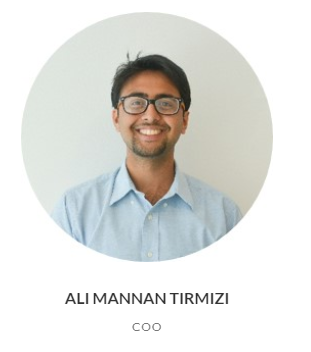 Ali, a 23-year-old student of Electrical Engineering at LUMS, is one of the Pakistanis behind Xyla Waters. He has a diverse set of interests, having studied comparative public policy at the University of Massachusetts, Amherst as part of the SUSI leaders program. For the past couple of years, he has been working on the SpaceX Hyperloop pod design competition where he and his team have presented their work to SpaceX and Tesla engineers.
 Iqra, another Pakistani on the team and an undergraduate from LUMS, is the person behind the startup’s research collaboration with MIT. She previously worked at the Technology for People Initiative, a research lab that aims to leverage the use of technology to solve public sector problems. Currently, she is pursuing her masters in Technology and Policy at MIT with a focus on modeling water and energy systems as a nexus.

Comments
Post a Comment