
This self-driving car can navigate unmapped roads


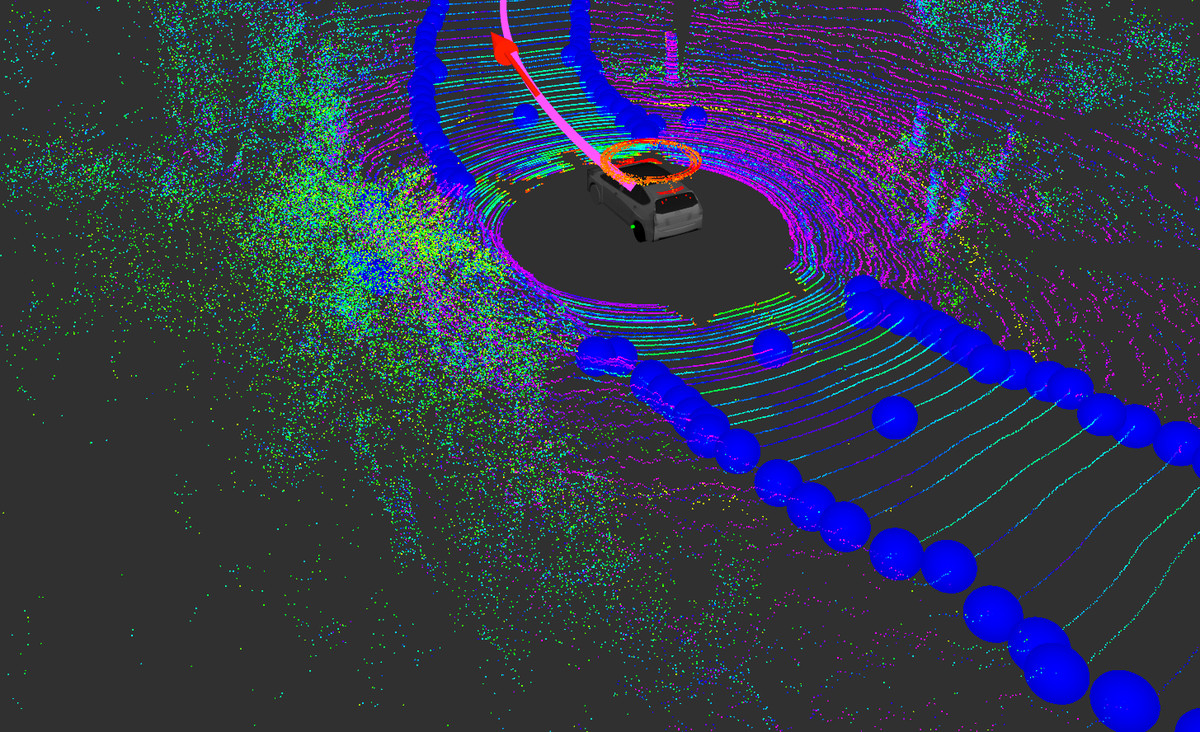
Researchers from MIT Computer Science and Artificial Intelligence Laboratory (CSAIL) have built an innovative new system that enables self-driving cars to drive on the unmapped country road without the need for 3D maps. Named ‘MapLite’, the system combines GPS data with a series of high-tech sensors that accurately observe the road conditions. This allowed the team to autonomously drive on multiple unpaved country roads in Devens, Massachusetts and reliably detect the road more than 100 feet in advance.

Daniela Rus, Director of CSAIL at MIT said in a statement,
“Cars use these maps to know where they are and what to do in the presence of new obstacles such as pedestrians and other cars. The need for dense 3D maps limits the places where autonomous cars can operate.”
MIT explains how the system is able to work without 3D maps,
MapLite uses sensors for all aspects of navigation, based on GPS data only to obtain a rough estimate of the car’s location. The system first establishes both a final destination and what researchers call a “local navigation objective, which must be in view of the automobile. Their perception sensors then generate a path to reach that point, using LIDAR to estimate the location of the edges of the road. MapLite can do this without physical markings on the road by making basic assumptions about how the road will be relatively flatter than the surrounding areas.”
In tests on unmarked country roads in Devens, Massachusetts. The researchers were able to get the car to navigate along a 1 kilometer (0.6 mile) stretch without human intervention. Their results will be presented at the International Conference on Robotics and Automation (ICRA) in Brisbane, Australia, at the end of this month.


However, for now, the challenge is to expand the diversity of road types the system can handle. It currently struggles with rapid changes in elevations like you would see on mountain roads. Additionally, it is adding the ability to recognize lane markings and road signs so it can follow complex traffic patterns.

Comments

Popular posts from this blog

This startup is pairing the blockchain with farming

Ripe, a blockchain startup, is  showcasing  how the distributed ledger technology can be applied to farming and provide companies with important data on crops and throughout the supply chain. By combining a blockchain with purpose-built scanners and specialized sensors, the company is able to provide critical data that is easily communicated to partners, demonstrating why  blockchain is growing more popular  as a tool to be leveraged as part of an IoT solution. Blockchain is a key tool for the IoT because of how it combines data storage and communication in a trusted medium. A blockchain is a shared, distributed database  that acts as an immutable ledger, recording entries and verifying them across a number of independent participants. Once an entry is made, it’s marked with a unique hash code that places it sequentially in the ledger. In agriculture, this means that farmers can use sensors and handheld devices to gather data about crops like tomatoes...

Honda Launches the CR-V SUV in Pakistan

The 2018 Honda CR-V has been launched in Pakistan and it looks charming. Honda has finally launched the 2018 Honda CR-V in Pakistan. This Sports Utility Vehicle (SUV) has proven to be pretty popular around the world with an average of 300,000 units sold annually. In Pakistan, the Honda CR-V is gaining the popularity and attention of local auto enthusiasts. Honda CR-V 2018 was recognized as ‘2018 Motor Trend SUV of the year’ recently as well. The international model of CR-V has these four variants: Honda CR-V LX (Standard), Honda CR-V EX, Honda CR-V EX-L, Honda CR-V Touring. The CR-V offers pretty great features when you look at it. Let's take a look at what Honda Compact Recreational Vehicle (CR-V) has to offer. Exterior Because of its shiny new sporty-looking exterior, the vehicle is placed in small sports utility vehicle’s category. The exterior, no doubt, makes you want to look twice as some modifications to the previous model have been made. ...

Samsung Launches Mid-Range Galaxy Wide 3

HANDSETS Check out Samsung’s new low-mid segment smartphone, the Galaxy Wide 3 with 3300 mAh battery and a 5.5-inch display. Samsung unveiled Galaxy Wide 3 for the South Korean market featuring low-mid specifications, and a design much similar to the well-known Galaxy J series. It does not follow the sweet bezel-less display trend, albeit comes with decent specifications for all those Samsung fans out there. Design & Display As you’d expect, the design is fairly simple with large bezels that house Samsung’s signature hardware button configuration, with the company’s latest icons for the back and menu button. The volume rocker looks modern and is housed on the left edge of the phone. The display is a 5.5-inch HD (720 x 1280) unit, an IPS LCD, with no edge-to-edge aesthetic. Huawei Unveils 8e Youth With a Tall Display & Android Oreo For Cheap Hardware & Storage The Galaxy Wide 3 is powered by Samsung’s Exynos 7870, octa-core, clocked at 1.6 G...